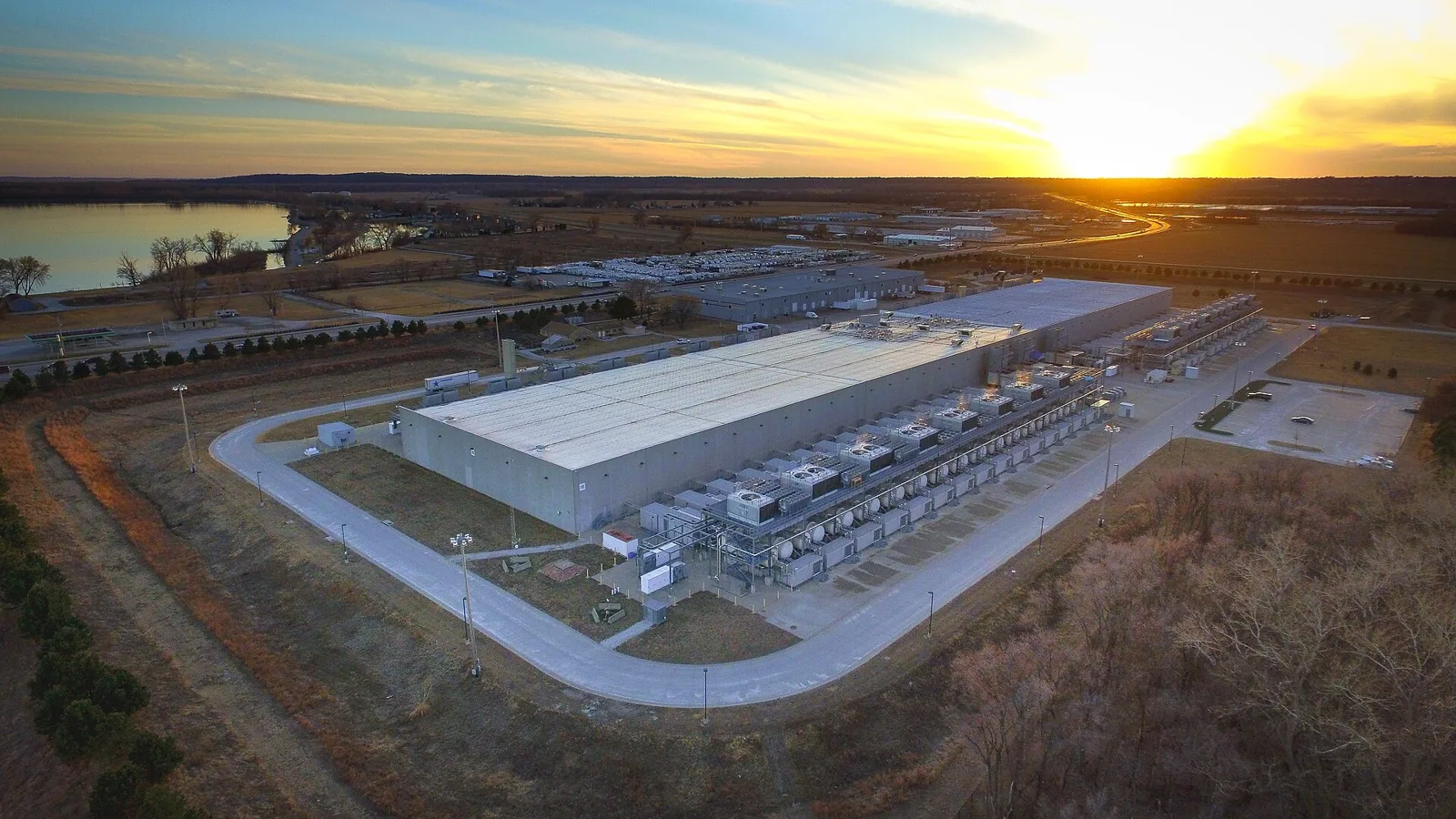
Roswell caps data centers at 20 megawatts, bans them next to homes and limits night noise to 45 decibels. What the city's rules say and where one could go.
No data center in Roswell can draw more than 20 megawatts of power. None can be built next to a home or a residentially zoned lot. At night, one may be no louder than 45 decibels at its property line.
Those are the core of the city’s data center rules, which Mayor and Council adopted Aug. 10. The city gathered the adopted ordinance and its research in one place on Oct. 13. The city wrote the rules while, by its own account, no data center was proposed in Roswell.
The council approved Ordinance No. 2026-08-13 5-0 on second reading, with council member Jennifer Phillippi excused. It took effect the same day.
How the city got here
- Jan. 12: Mayor and Council approved a 90-day emergency moratorium on new data centers. At the time, the city’s development code had no rules written for them.
- April: the council extended the moratorium, and staff published a research report.
- June 6: the city said the moratorium would expire June 26 unless extended. It also said no data center projects were proposed in Roswell.
- July 27 and Aug. 10: first and second readings of the ordinance.
The timeline is from the city’s Roswell Connections page.
Two classes, by power use
The rules sort data centers by how much electricity they draw, not by building size.
| Class | Power demand | Distance from homes | Planted buffer |
|---|---|---|---|
| Exempt | Under 1 MW, and hospitals | None | None |
| Class 1 | 1 to 4.99 MW | 200 feet | 100 feet |
| Class 2 | 5 to 20 MW | 1,000 feet | 200 feet |
Distance runs from property line to property line. Power use is added up across every building, lot, tenant and phase under common ownership or in one development plan. That stops a large project from splitting itself into small ones.
A server room for a business’s own use, under 1 MW and with no substation, is not a data center under the rules.
Where one could go
Data centers are allowed only as a conditional use, which needs Mayor and Council approval. The city’s July memo says that process includes a public hearing.
- Class 1 is allowed in the Office Park (OP) and Industrial Light (IL) districts. It can only be an accessory use, part of a larger business on the site.
- Class 2 is allowed only in the Industrial Light district.
On top of the distance rules, no new data center may sit next to a property that is zoned or used for homes. An owner of 10 acres or more can ask the council for a variance from that rule, but only if the building is more than 1,000 feet from the nearest residential property line.
Noise, water and generators
The ordinance sets limits that apply to every data center:
- Noise: 55 decibels (dBA) from 7 a.m. to 10 p.m. and 45 dBA from 10 p.m. to 7 a.m. Noise on the C-weighted scale may not pass 60 dBC at any time.
- Noise checks: a noise survey by a licensed acoustics engineer before approval, a test of the installed equipment before opening, and a new report every year with the business license renewal.
- Cooling: open-loop cooling that evaporates water is banned. Closed-loop systems are allowed.
- Generators: backup generators may be tested only between 9 a.m. and 7 p.m.
- Equipment yards: utilities and mechanical yards go behind the building, screened from streets and parks.
- Power reporting: the owner reports its annual power demand before each business license renewal.
- Emergency planning: before opening, a data center must give Roswell Fire its cooling fluids, fuel storage and hazardous materials, and agree response plans with police, fire and 911.
- Closing down: the owner must remove the equipment within 12 months of the site ceasing operation, or the city can accept a plan to reuse the building.
Applicants must also file water and energy plans, a stormwater plan and a tree protection plan. A “community impact narrative” must estimate jobs, construction cost, traffic, sewage and trash.
What it means for you
- No one can build a data center in Roswell without a vote. Every one needs conditional use approval from Mayor and Council. Watch the city’s meeting agendas for one.
- Your street is protected by distance. A large data center must be at least 1,000 feet from homes, behind a 200-foot planted buffer.
- Hear a noise problem? The limits are measured at the property line, and the owner must report its noise every year. Contact the city’s Community Development department.
- Read the documents yourself. The staff report, findings, ordinance and buffer standards are all on the city’s data center page.
For more city business, see our stories on the proposed 2027 budget and the 2026 property tax rate.
Have your say