Roswell's Historic Preservation Commission approved the district's first style guide 5-0. It sets brick, lighting, furniture and umbrella standards for Canton Street.
Updated Nov. 21: The Planning Commission voted Nov. 17 to defer the code change that ties the guide to the development code, a staff memo in the Nov. 23 Mayor and Council agenda packet says. The council takes a first reading Monday, Nov. 23, and the ordinance lists a second reading Dec. 14. Staff still recommend approval.
Updated Nov. 18: The Historic Preservation Commission approved the style guide 5-0 on Nov. 12 and recommended the code change 5-0, its brief minutes show. This story was first published Nov. 11, before the vote.
Roswell’s historic district has its first style guide, a visual rulebook for everything from sidewalk bricks to patio umbrellas. The Historic Preservation Commission approved it 5-0 at its meeting Thursday, Nov. 12, at City Hall.
Commissioners Robert Zappulla moved the approval and Ron Jackson seconded it, the commission’s brief minutes show. Commissioner Mary Nichols was absent. City staff had recommended approval, according to the agenda packet for the meeting. The draft runs to about 90 pages.
“Currently, there is not a visual reference book that indicates material ranges or specs for a given parcel in the Historic District,” the draft says. Until now, staff and the commission made “their best design advisements” from master plans, the code and their knowledge of the area, it says.
Five neighborhoods, one district
The guide splits the historic district into five “neighborhood identities,” each with its own look:
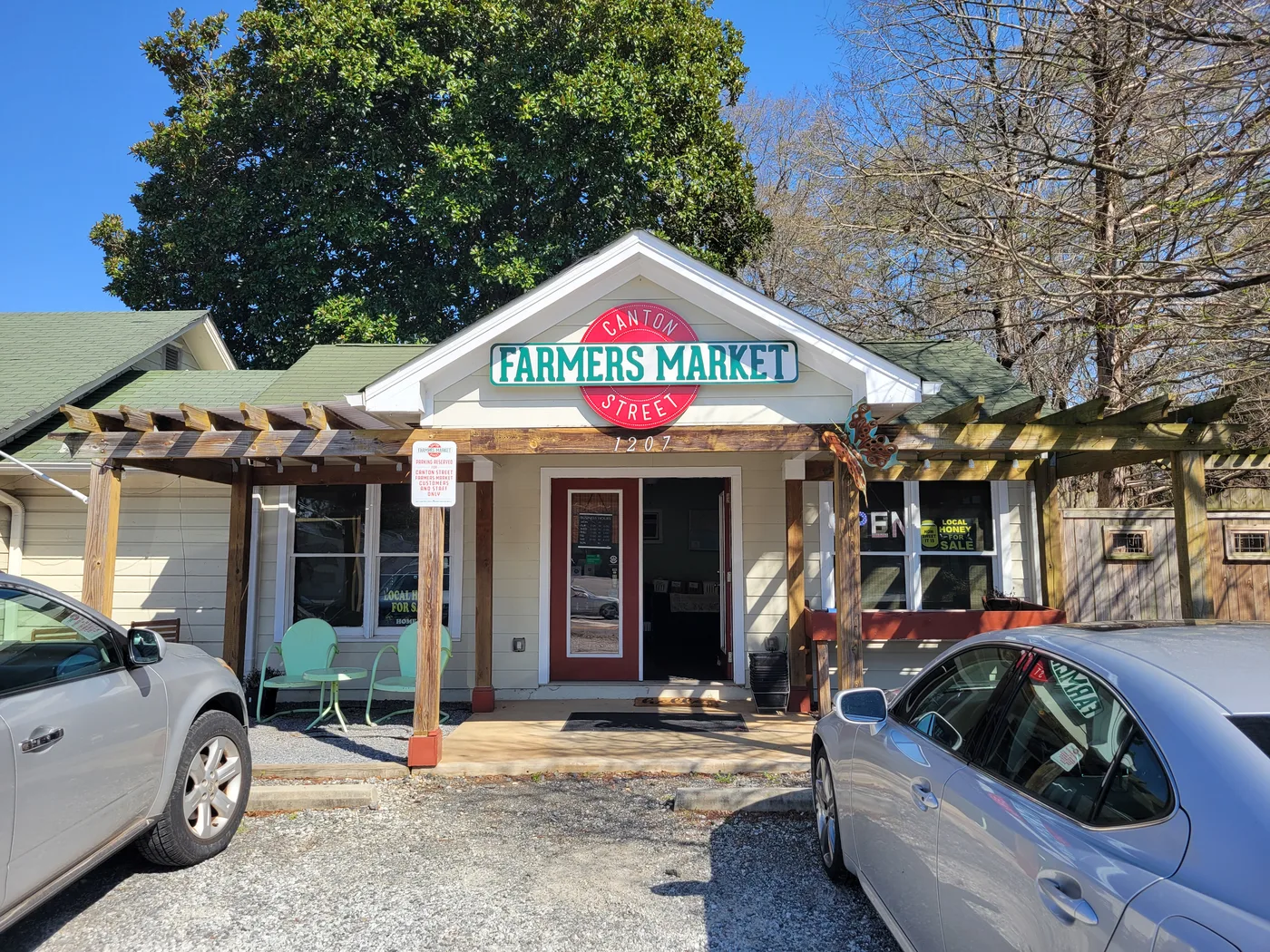
- Canton Street: from Old Roswell Cemetery and Woodstock Street south to Magnolia Street, between Canton Street and Highway 9. The draft calls it the core of what most people know as downtown Roswell.
- Warehouse District: east of Highway 9 between Norcross Street and Oak Street, including the new Southern Post and Hillrose developments.
- Town Square: from Magnolia Street south to the Heritage Trail subdivision, between Mimosa Boulevard and Highway 9.
- Mill Village: south of Oxbo Road and east of Highway 9, bordered by Vickery Creek.
- Vickery Creek: from the Azalea Point subdivision along Highway 9 south to the Chattahoochee River.
What it sets out
A district-wide section lists the materials meant to tie all five areas together. Among them:
- red brick sidewalk pavers, 4 by 8 inches, laid in a herringbone pattern with a border row
- a six-sided black lantern on a 10-foot pole for street lighting, with warm white bulbs
- black cast-metal benches, cafe chairs and cafe tables, with named Victor Stanley models
- black metal trash and recycling bins with dome lids
- two reference paint ranges: Sherwin-Williams’ Victorian palette and Benjamin Moore’s Historical Color Collection
Each neighborhood then gets its own advice on trees, signs, public art and outdoor seating. On Canton Street, the draft favors black wrought-iron cafe tables and solid-color umbrellas. For the narrow patios along the street, it suggests 6-foot or 6.5-foot umbrellas that stay out of the sidewalk. Fringe and fake grass thatch are “not encouraged,” because they suggest a pool or beach.
Murals on historic buildings and brick are “generally not encouraged” on Canton Street. The draft suggests hanging panels or reliefs instead. In Town Square, it prefers shade from timber pavilions or trees over fabric umbrellas.
Guidelines, with teeth for small permits
A companion change to the city’s zoning code would tie the guide to it. “This text amendment binds the Style Guide to the code,” Planning and Zoning Director Jeannie Peyton wrote in an Oct. 19 memo in the packet.
The memo says style guides “will act as guidelines, not regulations.” The commission or the Design Review Board would adopt them and could revise them without a code change.
The draft code language would also:
- let staff deny a small administrative application, such as new awnings or lighting, if it “does not meet the standards of the Style Guide”
- let a historic-district restaurant use outdoor dining furniture that meets the guide, instead of getting the commission’s approval for it
- have the commission and the Design Review Board weigh the guide when they review larger projects
The commission can still approve variations where “the spirit and intent of the guidelines are maintained,” the draft code says.
What else the commission did
The commission also voted 5-0 to recommend the code change that ties the guide to the zoning code. Commissioner Jacqueline Bass moved it and Commissioner Lossie Lively seconded it.
It discussed the Sloan Street Park playground renovation with the Recreation and Parks Department. Sloan Street is one of the four parks getting new playgrounds under the City Council’s $1.54 million approval in October. The minutes record the item as discussed, with no vote, and no plans for it were in the packet.
The commission also approved its 2027 meeting calendar as staff proposed it, with meetings on the second Wednesday of each month starting Jan. 13.
What it means for you
- Own or run a business in the historic district? The guide now shapes what staff and the commission expect from signs, awnings, umbrellas, patio furniture and paint.
- Next step: the Planning Commission reviewed the code change Tuesday, Nov. 17, according to its Nov. 17 agenda. Its recommendation has not been published. The Mayor and City Council then decide on the code change. No council date has been posted.
- Read it yourself: the full draft is the first attachment in the commission’s agenda packet.
Have your say